
How Much of a Down Payment Should You Make on Your Calgary Mortgage?
Posted by Call Centre on Wednesday, October 17th, 2018 at 4:03pm.
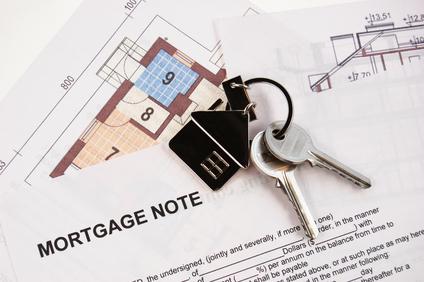 Are you planning on purchasing a new home in the Calgary area soon? If so, you're probably saving up for your down payment. There are a few things that you should understand, however, about how to save for a down payment and the size of the down payment needed in order to buy a Calgary home.
For informational purposes only. Always consult with a licensed mortgage professional before proceeding with any real estate transaction.
How Much Money Down Do You Need for a Home?
The most important thing that you need to know about your mortgage is that an insurance premium will need to be paid to the Canada Mortgage and Housing Corporation if you can't make a minimum 20% down payment for your home. This premium is based on the total amount of the mortgage. Without putting up a 20% down payment your home loan will fall into the category of a high ratio mortgage.
Down Payments and Lenders Mortgage Insurance Premiums
The premium that you'll have to pay all depends on the percentage amount you are able to put down. If you make a down payment that's between 5% and 9.9% you'll end up paying a premium of 2.75%. If your down payment is anywhere between 10% and 14.9%, you'll end up paying a 2% premium. You'll need to pay a 1.75% premium for a down payment that is between 15% and 19.9%.
Any ratio of down payment that is below the 20% mark will fall into the high ratio mortgage classification, no matter how high or low the ratio may be.
There is no negotiation on these insurance fees and you can see that it really doesn't make any sense at all to pay a 19.9% down payment. The only way to avoid these insurance fees is to ensure that the full 20% down payment is made.
Law Changes Have Eased the Burden on First-Time Homeowners
If you're thinking that a 20% ratio is much too high, you should actually be considering yourself lucky. Before May 2007 you had to pay a 25% down payment in order to avoid these fees. The laws were changed back then in order to help first-time homebuyers purchase a new home.
If you can’t afford the full amount on your own, you may want to consider finding the extra money somewhere whether it be from a parent, an RRSP or from another source to make sure that the 20% ratio is covered. Even if you have to make interest payments to bring the down payment into a higher-level, you'll probably end up saving money by doing so.
How Calgarians Save for Their Home Down Payment
You might not like the answer, but it would seem that most people do it the old-fashioned way. They save their money.
Local mortgage brokers agree that close to 60% of first-time home buyers have saved at least the minimum 5% required to put down on a property, if not more. That includes using money saved in an RRSP, which first-time home buyers can dip into to help with a down payment. This program allows people who have never bought property before, to use up to $25,000 from their RRSP without tax penalty. Of course, if a bigger down payment is required more money can be withdrawn from a registered retirement fund; however any amount over the $25,000 will be taxed. You are not restricted to taking out the $25,000. You will just have to pay tax on the amount over and above that.
The other 30% of first time purchasers have been gifted with the money in some manner. From a direct family member such as parents, siblings, grandparents either as a cash gift or from an inheritance. There is no penalty or tax implications from using gifted funds as a down payment, but at the time of purchase the bank financing the mortgage will need to see proof of how the funds were obtained. That includes a letter from the family member gifting the money and in some cases, copies of bank statements showing money coming out of one account and into another. The path the money took to get into your hands is important.
Can You Borrow Money for a Home Down Payment?
The days of 0% down are long gone, but first time home buyers may want to investigate a program called “Flex Down”. This program is only for people with really good credit. It allows people to get a line of credit so they can borrow money for their down payment. As mentioned, it works for those with good credit because you must qualify not only for the down payment financing but for the mortgage as well. Not many people are approved for this program because people with excellent credit generally have good financial skills and make saving money a regular habit. But it might be worth a shot.
Research the Attainable Homes Calgary Foundation
The City of Calgary oversees a non-profit organization called Attainable Homes Calgary. Through partnerships with builders, developers, lenders and lawyers, this organization makes it possible for people to purchase a home with just $2,000 of their own money. Most people when pushed and given sufficient time, can come up with $2,000. Prospective home buyers must register through the website and complete an intake process plus take mandatory education sessions as part of the journey towards qualifying for this program. With the benefit of financial counselling, those who may have fallen through the affordable housing cracks can have a shot at home ownership.
Bear in Mind Minimum Home Down Payments
The very minimum amount required as a down payment is still 5% of the purchase price. When there is a down payment that is less than 20% of the purchase price, the mortgage must be insured by Canada Mortgage and Housing. They’ll let you put a 5% down payment on a house that’s under $500,000. They have recently changed the rules and now, purchases on homes over half a million require more than 5%. That rate applies to the first $500,000 and goes up exponentially to a million. For example, a $700,000 home would need a 6.4% down payment. Homes over a million are not insured by CMHC so 20% down at minimum is what’s required.
Strategies for Saving Up a Home Down Payment
The hardest part about doing anything is just getting started. When you first look at the possibility of owning your own home it can seem quite daunting. The first thing that you'll need to do is save up for a down payment and for many this can seem unreal or it can feel like it's going to take years to get it done.
There can be something magical that happens though when you set your mind to something and are determined to see it through. Home ownership works the same way.
Set Your Sights On The Goal
You need to be bound and determined that you are going to own your own home and make it happen no matter what obstacles get in your way. This is how to climb mountains and make it to the top. When you know that there will be some obstacles that turn up and expect them in advance, you'll be better able to handle them and plow through towards the final goal of getting your first down payment in order.
Yes, some of these setbacks may be financial in nature but the only thing that will get you to the other side to become the proud owner of a new home is persistence. This is what other people have had to do, well most of them anyway, and do it they did. First-time homebuyers made it through the rough spots in order to come to a closing date and be handed the keys to their property.
Saving Up The Money
There are lots of small things that you can do to help you save up the money faster. Of course, the first thing you'll need to do is work out a monthly budget so that you can start putting some of your paycheck into a savings account for the down payment. The next thing to do is go over your budget again and see if you can create money out of it. Perhaps instead of buying 5 coffees per week on your way to work you could cut it down to 2. Little things can certainly add up quickly when you're saving money and when you have established a clear goal you'll know why you're passing by the coffee shop on the way to work and won't feel resentful about it.
Another thing that you can do to help save money faster is let your relatives know that this is what you are trying to accomplish as fast as possible. Then, suggest to them lightly that you would appreciate birthday, Christmas or other holiday gifts in the form of money instead of traditional gifts and that you will be putting this money aside to help pay for your new home. Most of your relatives won't be offended at all by this and will actually be quite honored to help support you in your quest towards homeownership.
Stay Motivated
The fastest way to accomplish your goals is by staying motivated. The best way to do this is to look for the real estate inventory that's available now. It will get your blood pumping and your excitement rising as you look at all of the possibilities. While you may not be able to purchase the homes that are listed right now, you will feel a type of adrenaline rush knowing that you're on your way to becoming one of the people that can head out shopping for a new home and will soon have the money to put down as a down payment.
Another way to keep your motivation peaked is to put up little signs around your house stating your goals and your dreams regarding your upcoming real estate purchase. You can make a list of all of the features you'd like to have in your home and add to the list whenever a new thought hits you. By continually updating the list and seeing these notes in various rooms of your house, you'll be reminded of the purpose and will feel the motivation kick in as a result.
Contact a Calgary Real Estate Agent When You’re Ready to Buy
It won't take long before you are ready to buy a house as long as you persist with your efforts and never give up. While it's okay to get a bit discouraged when obstacles do crop up, never give in to total defeat. With a bit of saving and ingenuity, you can come up with your down payment faster than you ever thought possible. When you’re ready, contact a local Calgary real estate agent to learn how to proceed with your future home purchase.
For informational purposes only. Always consult with a licensed mortgage professional before proceeding with any real estate transaction.